
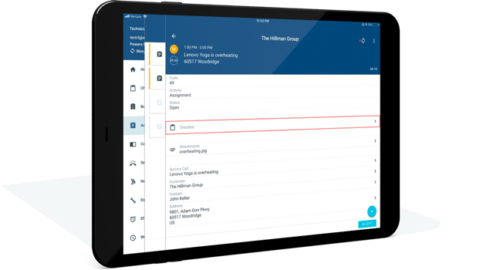
Every field service business reaches a point where the current setup stops being good enough. Jobs take longer to close, reports arrive late, and the gap between what is happening in the field and what management sees on screen keeps widening. “Is the technology the problem, or is it the way the technology was implemented?” Almost always, it is the latter. AtOPUSm, our SAP Field Service Management practice is built around getting that implementation right from the very beginning.
What Sets Our Field Service Implementations Apart
Field service digitalization delivers results when the solution is built around the operation, not dropped into it. We start with requirement engineering and business case validation before any configuration takes place, ensuring that every decision is based on operational reality from the ground up.
SAP Field Service implementations led by OPUSm always deliver better adoption rates and fewer post-launch corrections, because the groundwork is done right. When planning, customisation, and project management work together as one continuous process, the outcome is a system that works the way the business needs it to.
Core Capabilities We Deliver Across Every Implementation
Our SAP Field Service Management implementations cover every operational layer that field service businesses depend on. Scheduling, ERP integration, expense management, and post-launch support are not treated as separate workstreams. They are built as one connected system from the start, because that is the only way the technology delivers the operational performance it was designed for. Here is where the impact shows up most clearly:
Intelligent Scheduling and Dispatch
When technician availability shifts or a priority job arrives without notice, the system responds in real time. Assignments update based on live location and actual capacity, keeping response times tight and ensuring customers are never left waiting because of a coordination gap the system should have closed.
ERP Integration and Service Data Visibility
SAP Field Service connects directly with existing ERP infrastructure, bringing service records, job histories, and customer data into one environment. Every back-office decision starts from accurate, real-time information rather than outdated reports that no longer reflect field conditions.
AI-Powered Expense Management
Manual expense handling slows finance teams down in ways that rarely appear on performance reports. AI-powered processing captures receipts instantly, generates reports automatically, and moves approvals through the chain without manual intervention, removing an administrative burden that most service businesses have tolerated for too long.
How OPUSm Manages the Full Implementation Journey
Every project begins with a validated business case. Before configuration starts, the investment gets measured against clear, achievable outcomes, giving leadership the confidence and budget clarity needed to move forward decisively.
Requirement engineering follows, mapping every workflow against real operational conditions. SAP FSM gets configured around how the business actually runs, not around assumptions, which is what keeps post-launch corrections minimal and adoption rates consistently high.
Project management runs end-to-end across every stage. Milestones, resources, stakeholder coordination, and quality assurance all stay under one roof, ensuring the project reaches go-live on time, on budget, and without the scope creep that derails less structured deployments.
What Our Post-Launch Support Covers
Go-live is the beginning of operational performance, not the end of our involvement. Post-launch support at OPUSm runs directly through the software provider, giving clients direct access to the people who built the platform:
- System performance reviewed against operational requirements post go-live.
- Key user support is available to test the deployment.
- Configuration adjustments are handled as workflows and requirements evolve.
- Around-the-clock access for international clients through the software provider.
Strong field service performance after go-live comes from treating support as part of the system, not a separate engagement that only activates when something goes wrong.
Conclusion
OPUSm brings together SAP FSM expertise, structured project management, and post-launch support under one roof. For industrial and service businesses managing complex field operations, that combination removes the uncertainty that typically surrounds large-scale digitalization projects. The result is a field service system built around actual workflows, connected to existing infrastructure, and supported by a team that stays involved long after the system goes live.


