
Most service delays begin before a technician reaches the customer. Office teams search for information, dispatchers confirm details again and engineers arrive without the full service history. These small interruptions add up throughout the day. SAP Customer Service Management brings customer records, planning and service activities together, so every team works from the same information. That makes it easier to respond faster, avoid unnecessary administration and provide customers with a smoother service experience from beginning to end.
What does SAP Customer Service Management actually do?
Consider a manufacturer supporting equipment across multiple customer sites. Without integrated service management, dispatchers often switch between emails, spreadsheets and ERP systems before assigning a technician. Valuable time disappears before the work even begins.
Service teams work more effectively when everyone has access to the same information. SAP Customer Service Management links customer records, equipment history, service agreements and work orders, helping technicians prepare before travelling while giving office teams a complete view of ongoing service activities.
5 Reasons Why Disconnected Service Processes Create Expensive Delays
Disconnected service processes increase costs because information stops moving when people need it most. The biggest causes include:
- Customer, equipment and service information sits across multiple disconnected business systems.
- Dispatchers spend valuable time confirming technician schedules and missing job details.
- Manual data entry duplicates work and introduces avoidable reporting mistakes every day.
- Finance waits longer to invoice because service information arrives incomplete or late.
- Managers struggle to prioritise work without reliable, real-time visibility across service operations.
These delays reduce productivity, slow customer response times and increase administrative overhead across the entire service operation.
How SAP Service Management in Field supports operational execution
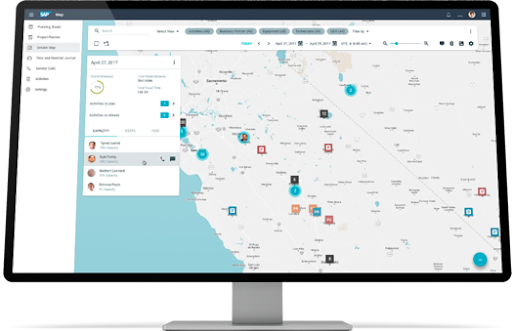
While SAP Field Service Management handles work execution in the field, the broader service management process oversees customer requests, planning and follow-up activities. The platform helps organisations assign the right technician, optimise schedules, provide mobile access to work orders and capture service reports immediately after each visit.
This distinction matters. Customer service management determines what work needs attention, while field service management helps technicians complete that work successfully. Together, they reduce manual coordination and create a consistent flow of information between office teams and field engineers.
SAP FSM closes the gap between planning and field work
Many service organisations discover that standard software cannot address every operational requirement. SAP FSM provides a flexible platform that organisations can extend as their processes evolve. Some businesses need technicians to collaborate through Microsoft Teams while viewing an asset’s service history. Others require Outlook calendar synchronisation or secure ERP integrations that transfer completed work orders directly into finance systems. These extensions remove repetitive manual tasks without changing established business processes. The result is a service environment that adapts to daily operations instead of forcing employees to invent workarounds.
How to evaluate whether your service operation is ready
Software cannot fix inconsistent service processes. Teams need clear responsibilities, reliable workflows and accurate information before any implementation begins. SAP Customer Service Management delivers stronger results when organisations first establish how service requests should move from enquiry to completion.
Ask these questions:
- Can technicians access complete asset histories before travelling?
- Does scheduling automatically reflect resource availability?
- Are completed service reports available to finance without manual data entry?
- Can managers track every service request from creation to completion?
Several “no” answers usually indicate opportunities to improve service workflows before inefficiencies become more expensive.
Building better service experiences through connected operations
The goal of customer service management with SAP is not simply organising service requests. The goal is creating a connected operation where customer information, technician activities and business processes support one another from start to finish.
Successful service organisations combine structured customer management with SAP Field Service Management to give technicians the information they need when they need it. During many implementation projects, the team at OPUSm has found that organisations achieve the strongest results when technology supports established operational goals instead of replacing them.
If you are reviewing your current service processes, begin by identifying where information stops flowing. Solving those gaps often delivers greater improvements than adding another standalone tool.


